WSH紫外明渠
WTV紫外垂直模块
ZL大型管道式紫外
CLEAR中压紫外
MOL板式臭氧发生器
UV-AOP高级氧化
D.FITE滤布滤池
ZL大型管道式紫外
CLEAR中压紫外
UV-AOP高级氧化
Extrem中压紫外
EX-Ue紫外
EX-UPW-TOC紫外
MOM板式臭氧发生器
MOS板式臭氧发生器
UV-Fenton光芬顿
UV-Oxidation紫外光氧化
EX-L紫外消毒器
EX-U紫外消毒器
ZL大型管道式紫外
CLEAR中压紫外
One-UV紫外消毒器
Extrem中压紫外
UV-AOP高级氧化
MOS板式臭氧发生器
COG板式臭氧发生器
UV-Fenton光芬顿
中压UV-Oxidation紫外光氧化
光解
巴氏消毒替代
光催化
低压UV-Oxidation紫外光氧化
光选机
并联机器人
直角坐标机器人
赛博一体化集装箱污水处理
D.FITE滤布滤池
模块化污水处理
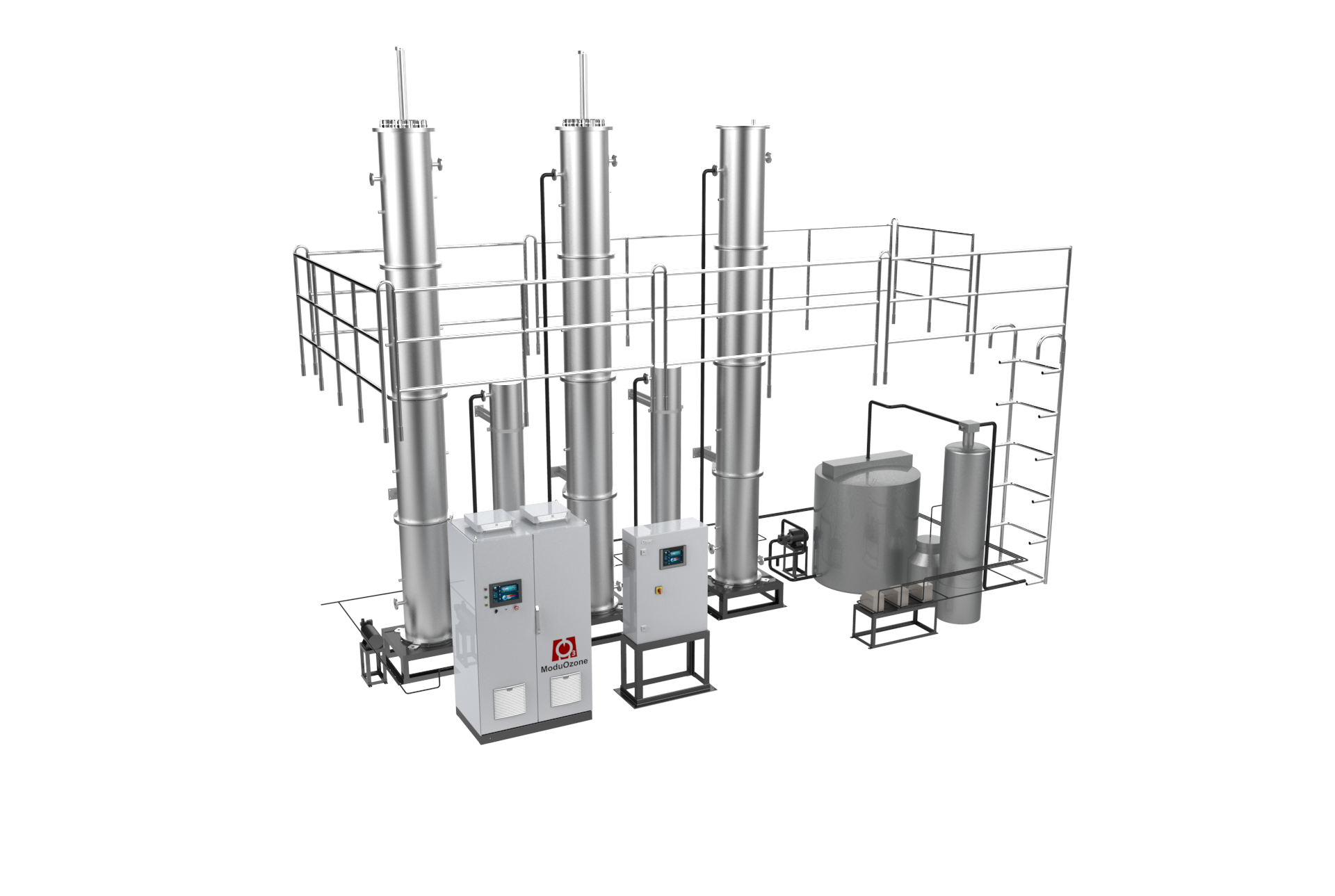
Modu Ozone板式臭氧
Active Pharmaceutical Ingredients (APIs) are the basis of the active ingredients of pharmaceuticals. Their production process often involves complex chemical reactions and separation and purification steps, generating large amounts of wastewater. These wastewaters typically have high concentrations of organic matter (measured by chemical oxygen demand (COD) and total organic carbon (TOC), contain structurally stable and difficult-to-biodegrade API molecules themselves and their production intermediates, and have high chroma, high salt content, and exhibit significant biological toxicity, resulting in generally poor biodegradability (BOD5/CODcr ratio).
Ultraviolet light/hydrogen peroxide (UV/H₂O₂) combined technology utilizes ultraviolet light of a specific wavelength to irradiate hydrogen peroxide (H₂O₂), triggering the decomposition of H₂O₂ molecules to produce highly reactive hydroxyl radicals (OH). The strong oxidizing properties and non-selectivity of OH radicals enable them to effectively destroy the chemical structure of API molecules and their complex intermediates, gradually breaking them down into small molecules and eventually mineralizing them into CO2, H₂O, and inorganic salts, thereby degrading pollutants.
UV/H2O2 technology demonstrates excellent degradation of a variety of typical APIs, including antibiotics, hormones, phenolic compounds, nitrogen-containing heterocyclic compounds, and some organic solvents (such as dichloromethane (DCM)).
The process flow for UV/H₂O₂ treatment of API pharmaceutical wastewater is as follows:

UV Hydrogen Peroxide Advanced Oxidation Process: Pretreatment, UV/H₂O₂ Reaction, and Post-treatment
· Pretreatment Stage
Grids and Screens: Remove large suspended and floating solids.
Equalization Tank: Evenly distributes water volume and quality, and buffers pH fluctuations.
Coagulation/Sedimentation/Flotation: Removes fine particles and improves UV transmittance.
· UV/H₂O₂ Reaction Unit
Reactor: Typically constructed of stainless steel or other materials with good UV and H₂O₂ resistance, the reactor is equipped with a UV lamp (either a low-pressure, high-intensity mercury lamp or a medium-pressure mercury lamp).
H₂O₂ Dosing and Control: Hydrogen peroxide solution is precisely dosed to the reactor inlet or reaction zone via a metering pump.
·Subsequent Treatment Stages
H₂O₂ Removal
pH Neutralization and Biological Treatment
Advanced Treatment
Customer Benefits of UV/H₂O₂ Treatment of API Pharmaceutical Wastewater:
Improves and Controls the Wastewater's Biodegradability (BOD₅/COD₃) Ratio
Rapidly Reduces Wastewater Biotoxicity
Ensures Production Continuity and Easily Achieves Regulatory Compliance
Empowers Green Pharmaceutical Manufacturing
Reactivity and Easy Control and Operation
Low Overall Operating Costs
High Process Operational Flexibility

Clear Medium Pressure UV Disinfection System
The ONYX-Clear-SZ in-line medium-pressure UV sterilizer utilizes medium-pressure multi-spectral UV lamps to not only destroy DNA/RNA but also intracellular enzymes and proteins, resulting in more thorough sterilization. It is designed to disinfect and degrade toxic micropollutants in water, including NDMA, 1,4-dioxane, endocrine disruptors (EDCs), pesticide residues, cyanobacterial toxins, GSM (geosmin), and 2-MIB (dimethylisoborneol).
In addition, combining oxidants such as O₃ and H₂O₂ with UV light, such as UV-O₃ and UV-H₂O₂ processes, can be used to oxidatively remove recalcitrant substances and organic matter, such as CC14 and polyaminobiphenyls, from wastewater.
MOM Ceramic Plate CD Ozone Generator
The MOM series of large ozone generators feature a highly efficient plate-type ozone generation system, a simple, high-end modular assembly design, a stable power supply system discharge module, a uniform discharge module cooling unit, sophisticated porcelain dielectric processing, and convenient construction and installation to ensure optimal ozone concentration and efficiency. These devices offer low energy consumption, high concentration, high power density, high reliability, ease of use, and intelligent functionality. They are widely used in drinking water treatment, reclaimed water and wastewater treatment, aquaculture and aquatic product processing, swimming pool disinfection, industrial oxidative bleaching, and landfill leachate treatment.
UV-AOP Advanced Oxidation
Ultraviolet Advanced Oxidation Process (UV-AOP) is an environmentally friendly technology that uses ultraviolet radiation to trigger oxidation reactions. Its core principle is to use UV light to excite oxidants to generate highly oxidizing free radicals, which in turn degrade organic and inorganic pollutants. UV-AOP is characterized by high efficiency, environmental friendliness, and zero secondary pollution. UV-AOP systems can be categorized into various types depending on the type of oxidant, the most common of which include UV/hydrogen peroxide, UV/ozone, and UV/chlorine.
ONYX-Clear-SZ-AOP can serve as the UV light source for UV-AOP. This UV-AOP system can be used to degrade toxic micropollutants such as nitrosodimethylamine, 1,4-dioxane, endocrine disrupting chemicals (EDCs), pesticide residues, cyanobacterial toxins, GSM (geosmin), and 2-MIB (dimethylisoborneol).
UV Photolysis
UV photolysis generally refers to the use of ultraviolet (UV) light to decompose substances, particularly pollutants.
Specific wavelengths of UV light (usually short-wavelength UV-C, such as 254 nm) can directly break the molecular bonds of certain substances (especially organic pollutants), causing a cracking reaction that breaks them down into smaller molecules, free radicals, or ultimately mineralizes them into CO₂ and H₂O. This is known as direct photolysis. It is primarily used for TOC removal in ultrapure water, residual chlorine removal and disinfection prior to RO membranes for purified water, and the decomposition and disinfection of ammonium chloride in swimming pools and water features.