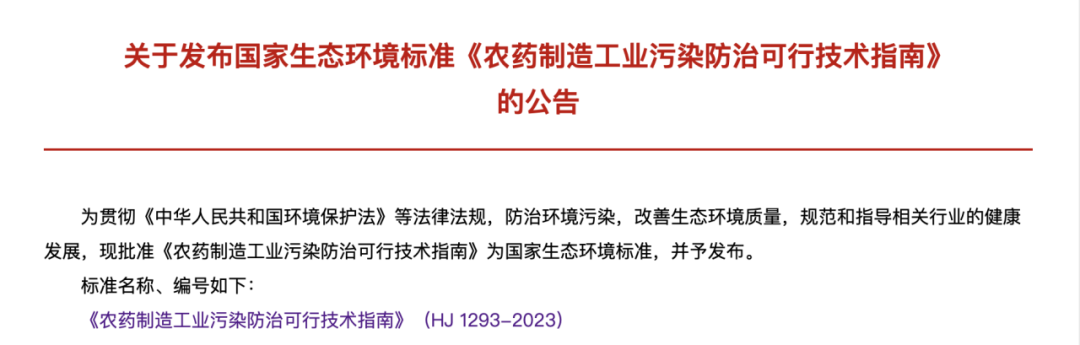
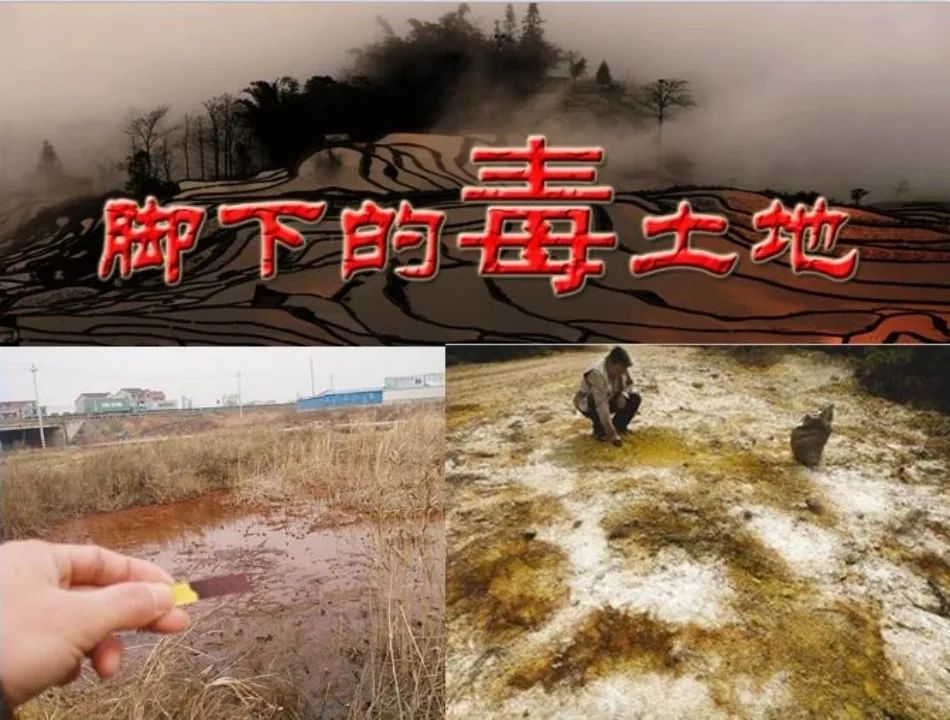
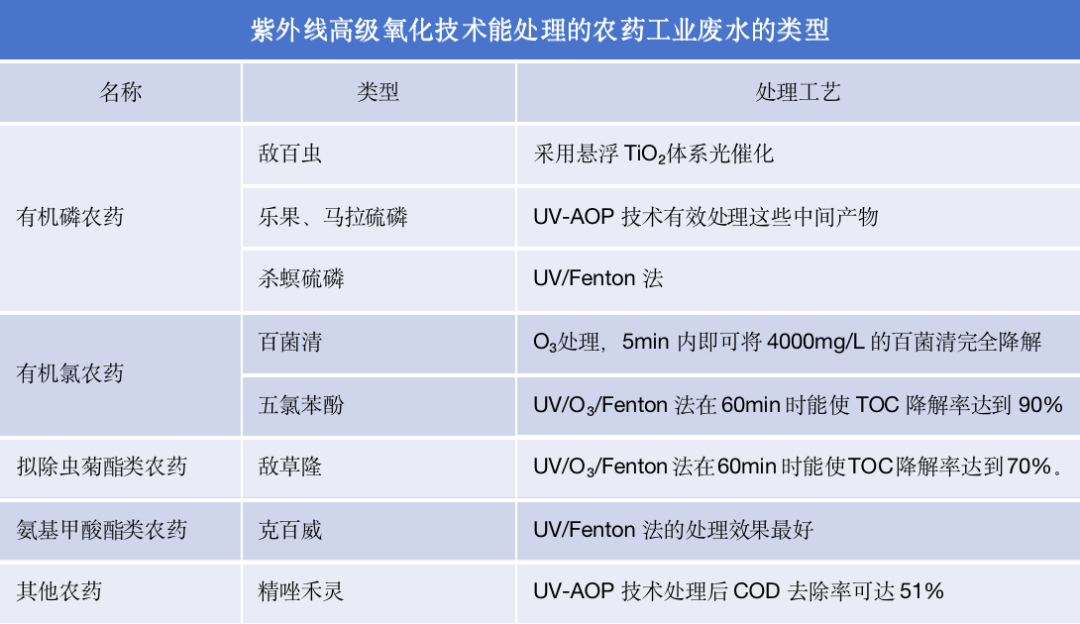
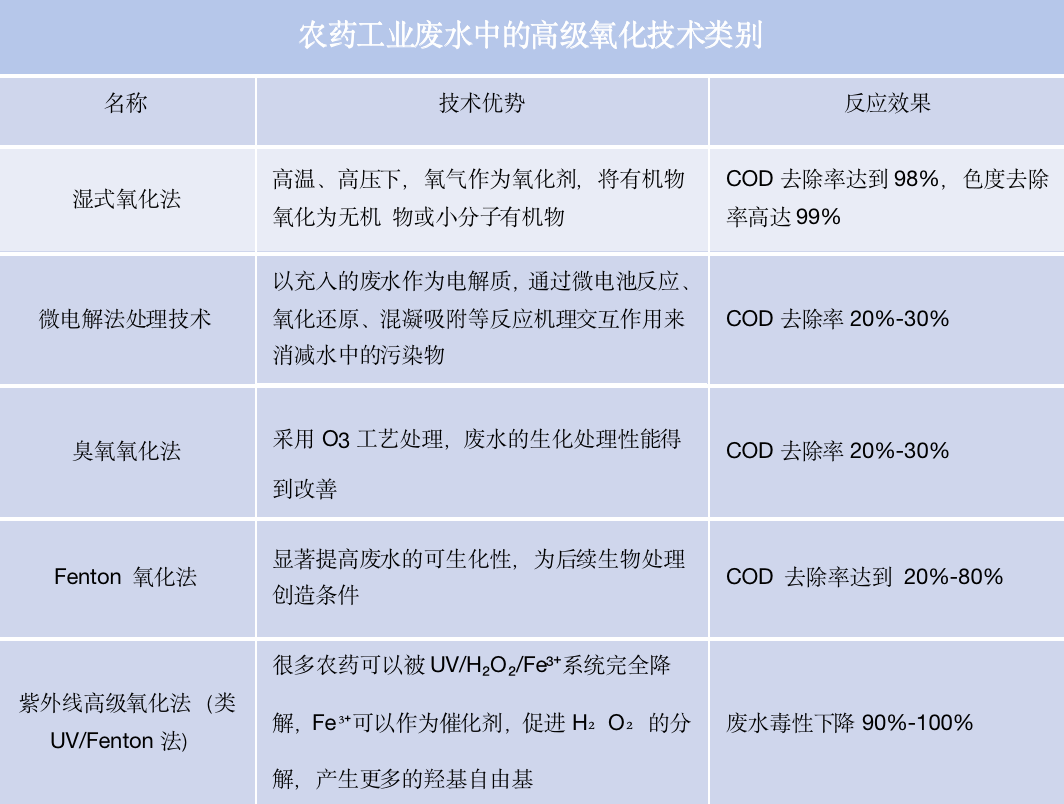
Pesticide industry wastewater poses serious risks to the ecological environment and human health due to its high toxicity, complex composition, resistance to degradation, malodor, and irritation. Under the new standards, comparing the advantages of different advanced oxidation technologies for different water qualities is a scientific approach to selecting specific technologies.
Part 2
Advantages of UV Advanced Oxidation
UV advanced oxidation technologies (such as UV/O₃, UV/H₂O₂, and UV/H₂O₂/Fe⁺) utilize Fe⁺ as a catalyst under UV light to promote the decomposition of H₂O₂, generating more highly oxidizing hydroxyl radicals (·OH). These technologies offer the following advantages:
01 - Highly Efficient Degradation of Refractory Pollutants
Broad-Spectrum: Degradation rates exceeding 80% are achieved for pollutants such as polycyclic aromatic hydrocarbons, organophosphorus compounds, and herbicides in pesticide wastewater. They are particularly suitable for halogenated compounds that are difficult to treat using traditional methods.
Synergistic Effect: Combining UV light with oxidants (such as O₃ and H₂O₂) can overcome the oxidation limits of a single technology and increase reaction rates. (For example, the UV/O₃ system is 30% more efficient at degrading dichlorvos than ozone alone.)
02-Low Risk of Secondary Pollution
Reduced Dependence on Chemicals: Compared to the Fenton method, the system eliminates the need for large amounts of iron salts, preventing the formation of iron sludge; it also enables homogeneous catalytic recycling.
Controllable Byproducts: Free radical oxidation primarily produces small, harmless molecules (CO₂, H₂O), eliminating potential byproducts.
03-Economical and Sustainable
Energy Optimization: UV lamp technology is mature, with operating costs lower than electrochemical methods; integrating UV-driven technology can further reduce energy consumption.
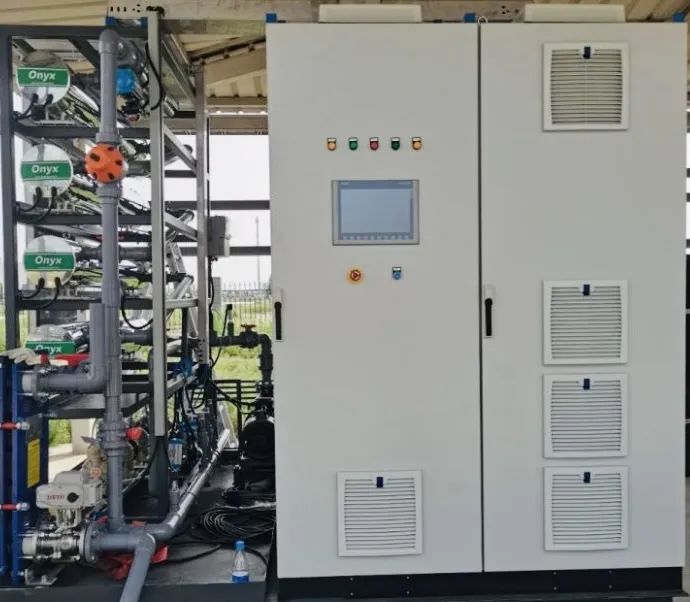
Modular Design: The system is compact and easily integrated with existing processes (such as membrane treatment), making it suitable for technological upgrades by pesticide companies.
04-Adaptability and Ease of Operation
Wide pH Range: Most UV/AOPs operate efficiently under neutral conditions, eliminating the cost of pH adjustments.
Automated Control: UV dosage and oxidant addition can be controlled in real time by sensors, ensuring stable and reliable operation.

 WSH紫外明渠
WTV紫外垂直模块
ZL大型管道式紫外
CLEAR中压紫外
MOL板式臭氧发生器
UV-AOP高级氧化
D.FITE滤布滤池
WSH紫外明渠
WTV紫外垂直模块
ZL大型管道式紫外
CLEAR中压紫外
MOL板式臭氧发生器
UV-AOP高级氧化
D.FITE滤布滤池