Residual chlorine in water generally refers to the chlorine component remaining after disinfection. It exists in the form of dissolved chlorine gas (Cl₂), hypochlorous acid (HClO), hypochlorite ions (ClO⁻), and chloramines (NH₂CL). Hypochlorous acid is the primary active component of residual chlorine, especially at neutral pH.
APPLICATION FIELD
Common Applications of "Dechlorination"

Industrial water treatment processes, such as those used in pharmaceutical, semiconductor, food and beverage, thermal power plants, and data center cooling water treatment systems, place stringent requirements on controlling residual chlorine and its oxidizing properties. However, traditional activated carbon and sodium bisulfite reduction methods both have significant process limitations.
TECHNOLOGY
Dechlorination Technology and Metering Requirements
UV dechlorination, as an efficient and clean solution, offers significant technical advantages for effectively removing residual chlorine (both free and combined chlorine) from water. Its core principle is to directly decompose chlorine and its compounds using ultraviolet light, or to generate photochemical reactions in water that stimulate free radical reactions to destroy chlorine compounds. If UV dechlorination is used in front of reverse osmosis membranes in water treatment systems, it can replace traditional activated carbon systems and reducing agent dosing systems.
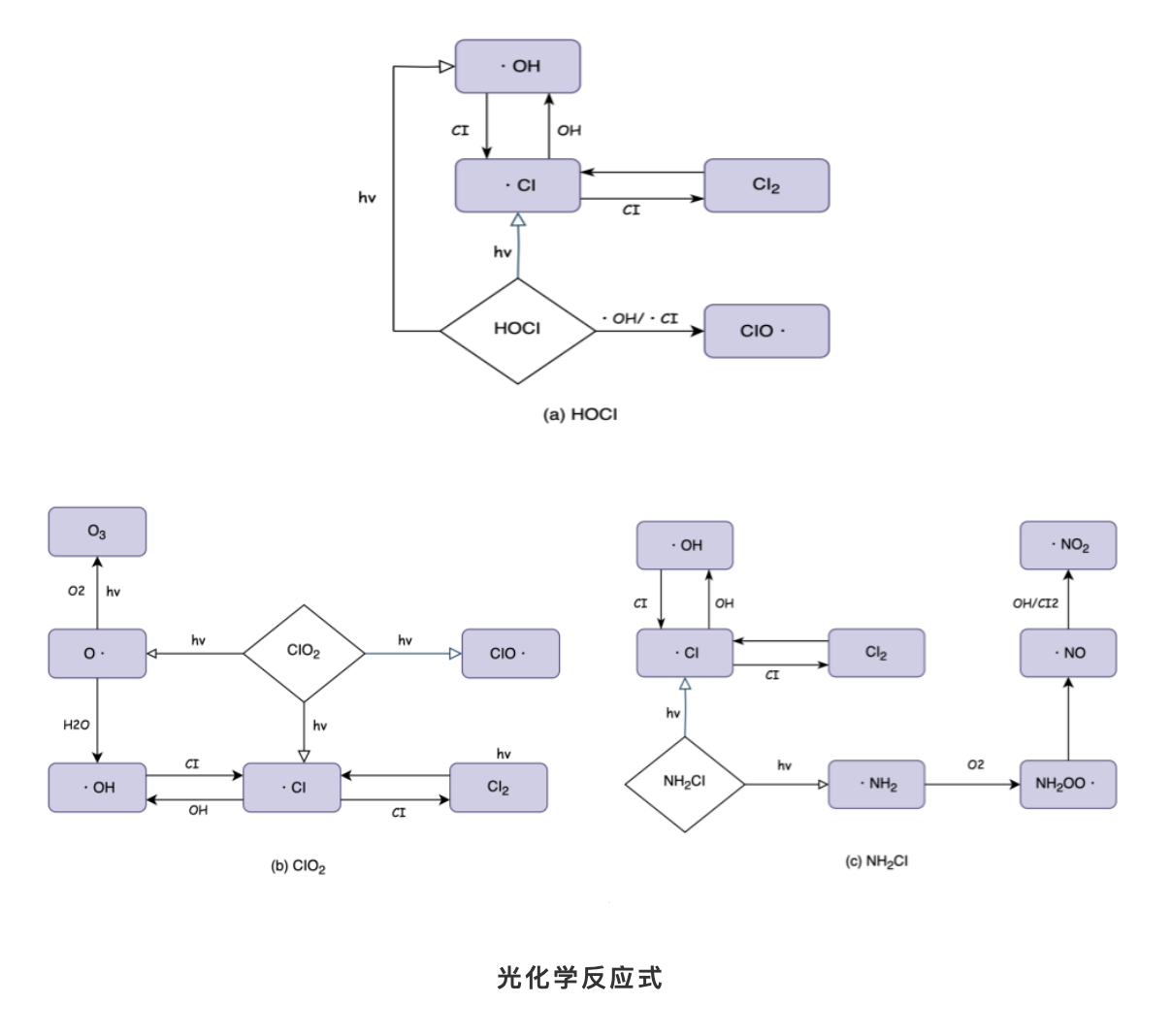
1. UV Dosing
The key to successful residual chlorine removal lies in UV dose. UV disinfection has little effect on chlorine attenuation when the UV dose is below 40 mJ/cm². UV dose is a function of the average irradiation intensity and contact time within the reaction chamber, and is related to water transmittance and SS value.
2. Influencing Factors
During the UV photochemical decomposition process, the UV dose of free chlorine is over 20 times the standard UV disinfection dose, requiring sufficient UV energy to achieve effective dechlorination. Furthermore, the composition, concentration, and pH of chlorides in the water also determine the UV dechlorination dose and the selection of equipment.
PRODUCT
ONYX UV Dechlorination
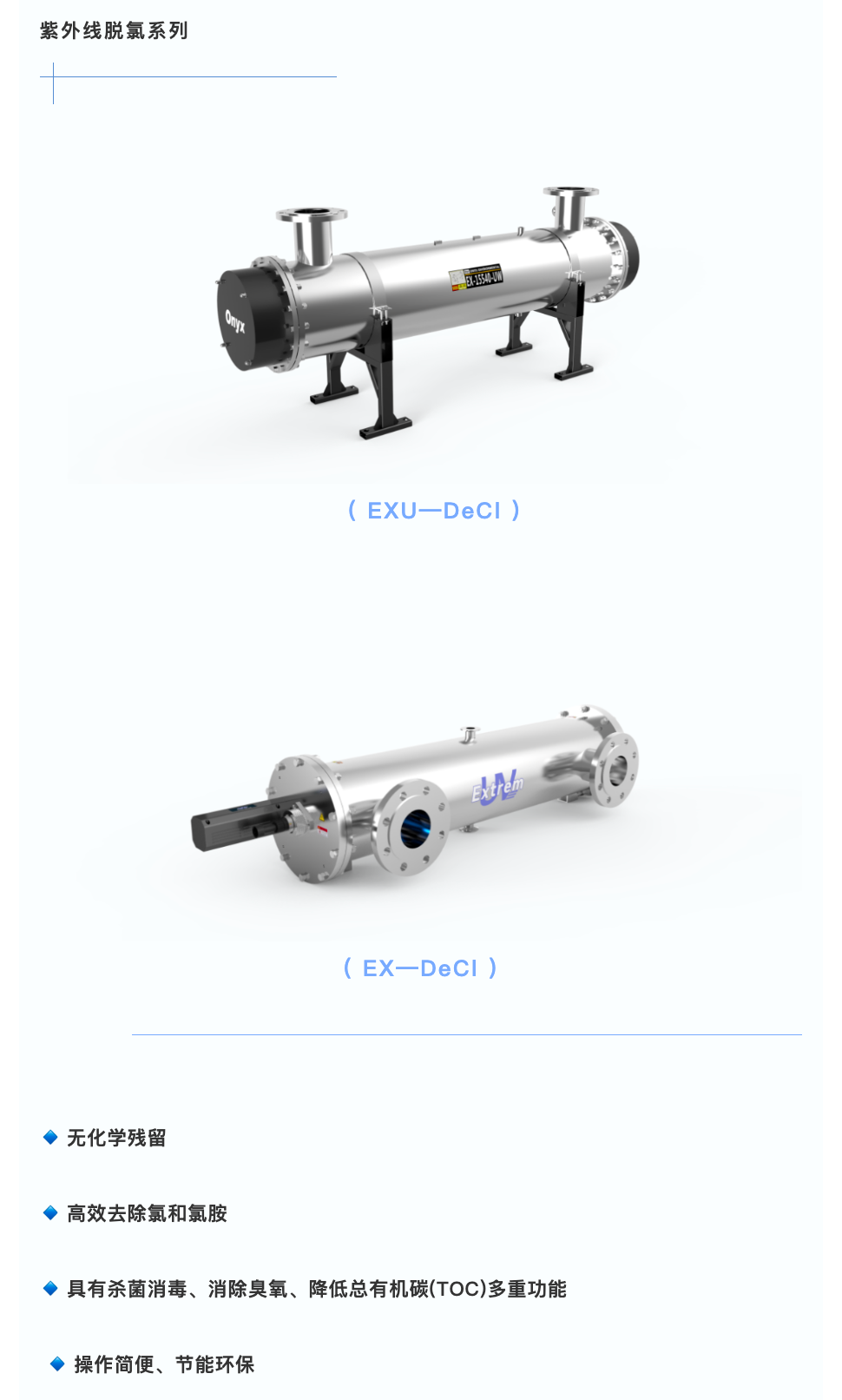
As an emerging water treatment technology, ultraviolet dechlorination technology has the advantages of no chemical residue, efficient degradation of chlorine compounds, and simple operation. It has been widely used in the fields of residual chlorine decomposition, semiconductor water treatment, RO pure water dechlorination, etc.
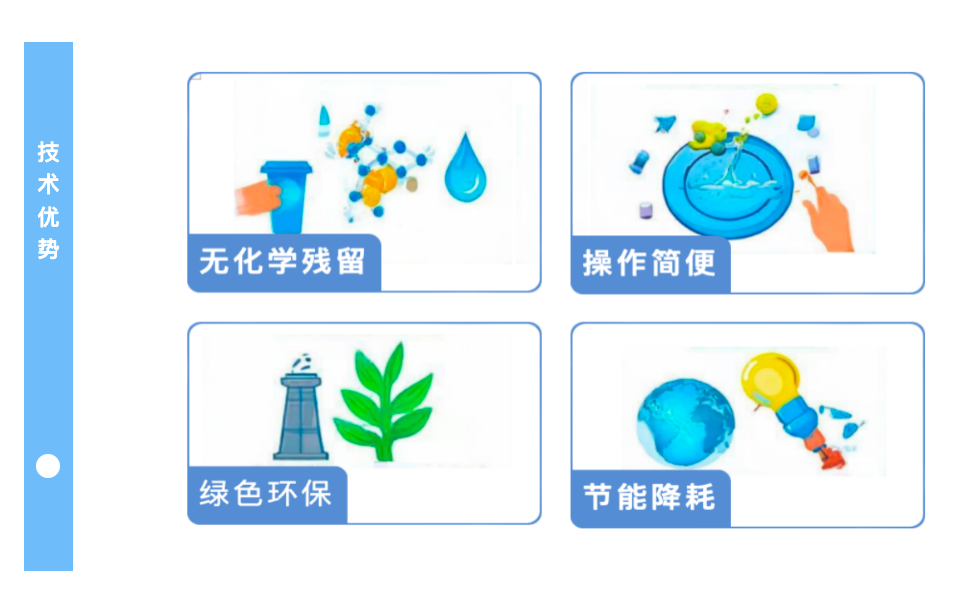
With the improvement of environmental awareness, the promotion of water resource protection policies and the green upgrade of China's manufacturing, ultraviolet photolysis chlorine technology will surely be more widely used.


 WSH紫外明渠
WTV紫外垂直模块
ZL大型管道式紫外
CLEAR中压紫外
MOL板式臭氧发生器
UV-AOP高级氧化
D.FITE滤布滤池
WSH紫外明渠
WTV紫外垂直模块
ZL大型管道式紫外
CLEAR中压紫外
MOL板式臭氧发生器
UV-AOP高级氧化
D.FITE滤布滤池