WSH紫外明渠
WTV紫外垂直模块
ZL大型管道式紫外
CLEAR中压紫外
MOL板式臭氧发生器
UV-AOP高级氧化
D.FITE滤布滤池
ZL大型管道式紫外
CLEAR中压紫外
UV-AOP高级氧化
Extrem中压紫外
EX-Ue紫外
EX-UPW-TOC紫外
MOM板式臭氧发生器
MOS板式臭氧发生器
UV-Fenton光芬顿
UV-Oxidation紫外光氧化
EX-L紫外消毒器
EX-U紫外消毒器
ZL大型管道式紫外
CLEAR中压紫外
One-UV紫外消毒器
Extrem中压紫外
UV-AOP高级氧化
MOS板式臭氧发生器
COG板式臭氧发生器
UV-Fenton光芬顿
中压UV-Oxidation紫外光氧化
光解
巴氏消毒替代
光催化
低压UV-Oxidation紫外光氧化
光选机
并联机器人
直角坐标机器人
赛博一体化集装箱污水处理
D.FITE滤布滤池
模块化污水处理
Modu Ozone板式臭氧
In May 2022, the General Office of the State Council issued the "Action Plan for the Control of Emerging Pollutants," establishing a prevention and control approach centered on "screening, assessment, and control" and "banning, reduction, and treatment" to comprehensively advance the control of emerging pollutants.
Ultraviolet Advanced Oxidation Technology
Emerging pollutants (such as POPs, EDCs, antibiotics, and microplastics) have become a focus of global environmental governance due to their environmental persistence, bioaccumulation, and high toxicity. Source control, process reduction, and end-of-pipe treatment are the overall approach to gradually reducing the residual levels of emerging pollutants in environmental media. However, the complex characteristics of emerging pollutants make their harmless disposal a current technical bottleneck.

From the perspective of mid- and long-term strategic planning for new pollutant control, it is crucial to develop efficient, economical, and environmentally friendly new pollutant control technologies to improve control effectiveness, accelerate the transformation and application of scientific research results, and promote the practical application of new technologies. It is well known that ultraviolet advanced oxidation technology (UV-AOPs) has the characteristics of "green genes" and may become a "green sword" in the field of new pollutant control!
Principles of UV-AOPs
1. Free Radical Oxidation Mechanism
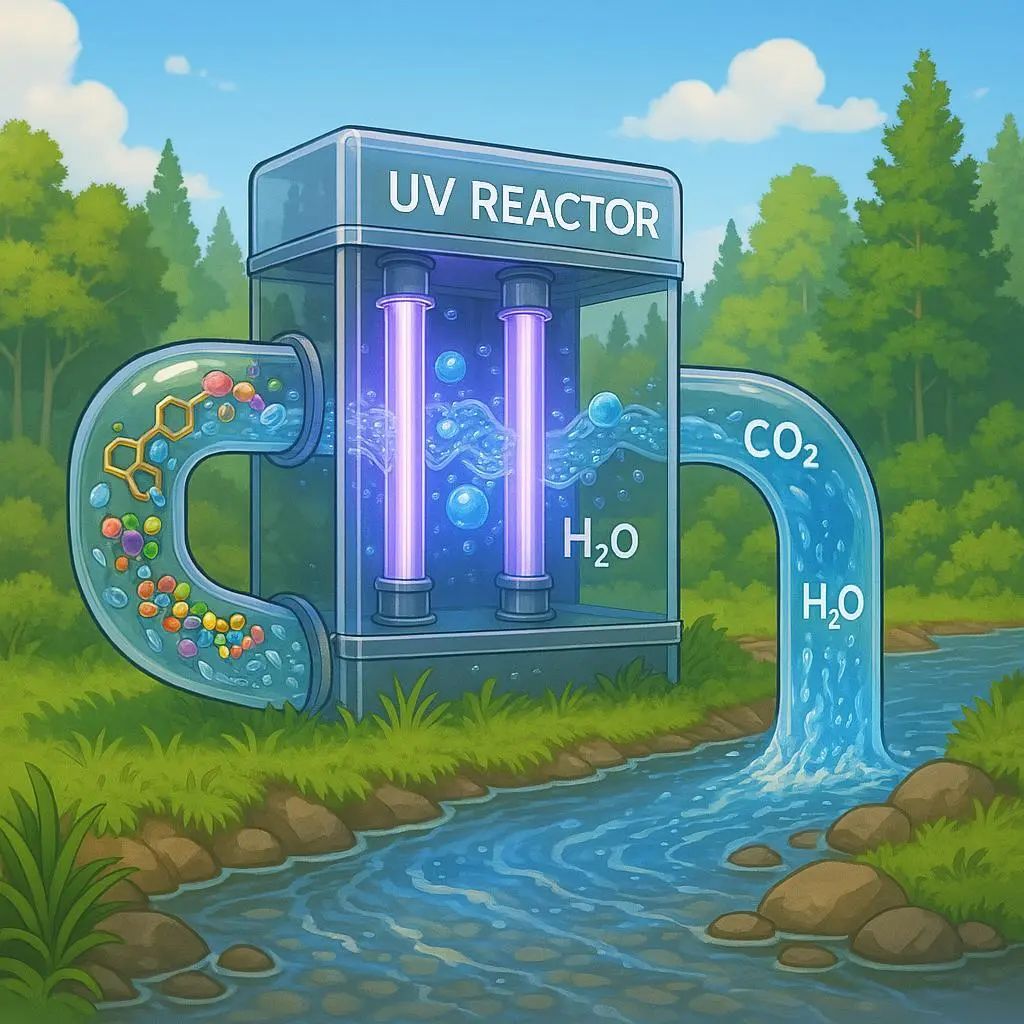
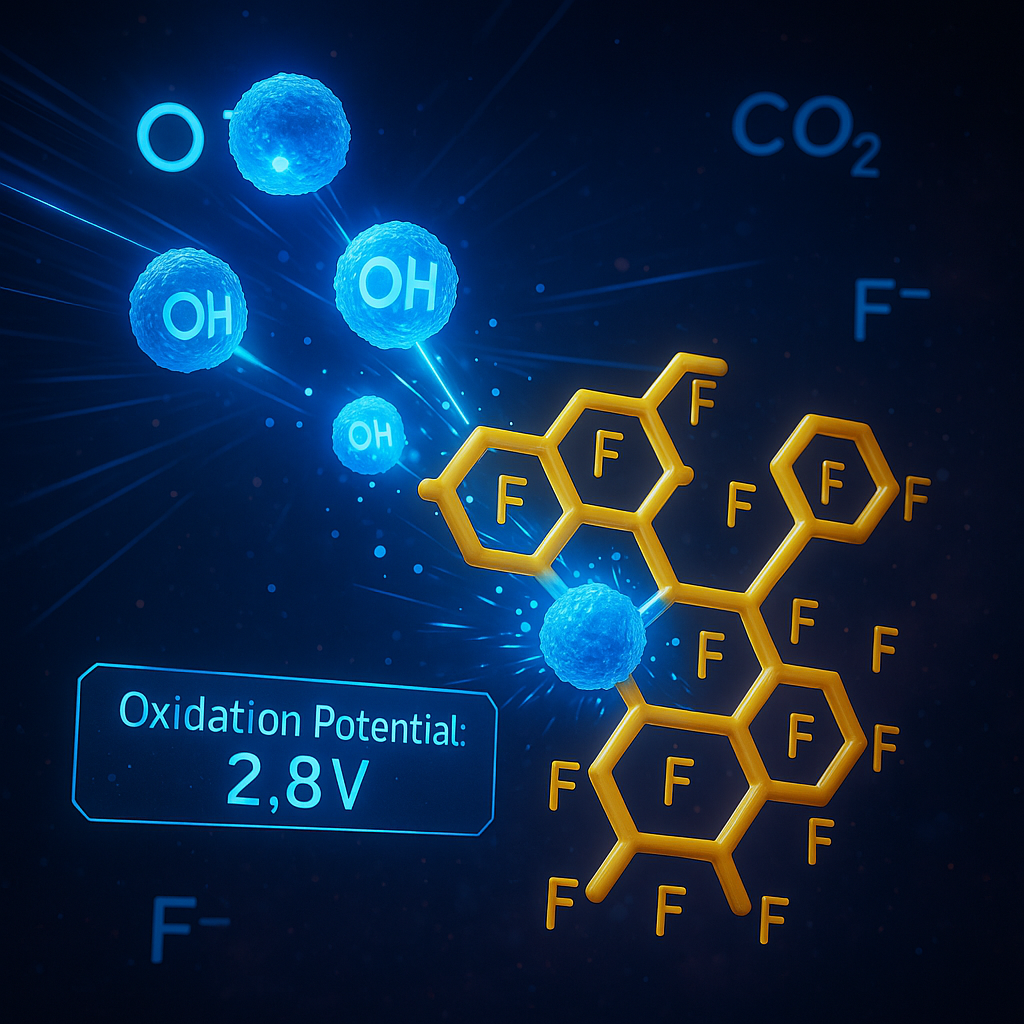
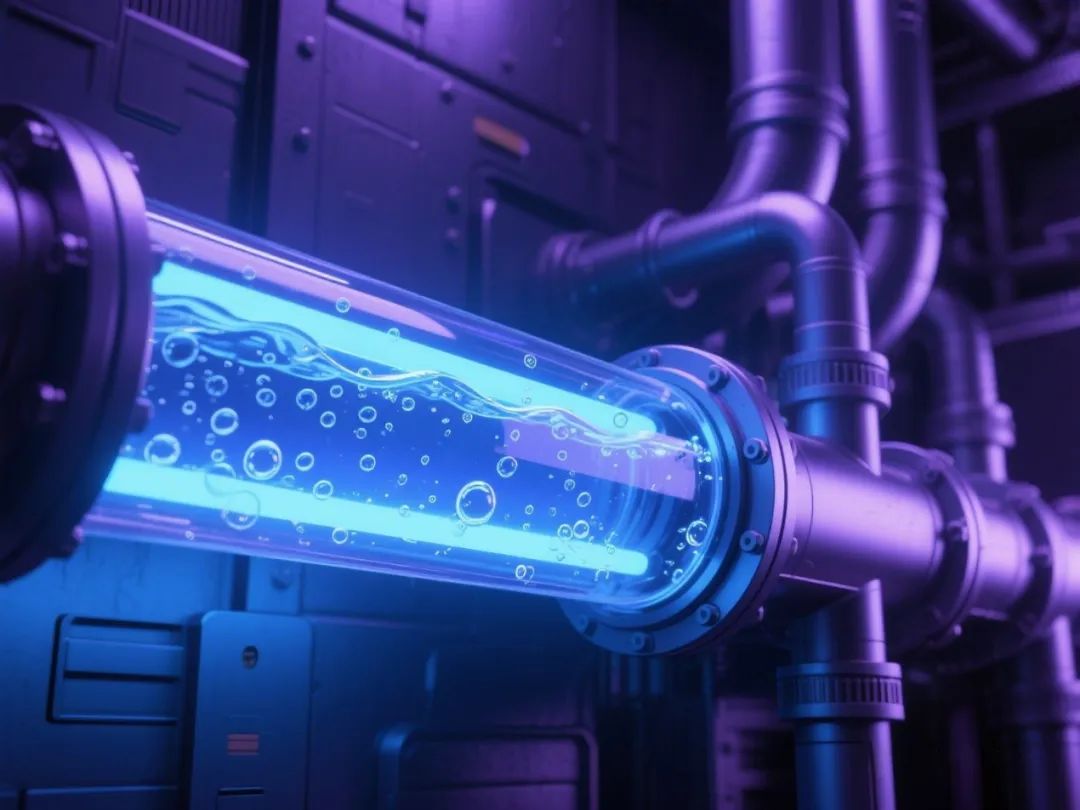
Ultraviolet advanced oxidation technology (UV-AOPs) combines ultraviolet light with oxidants (such as H₂O₂, O₃, and persulfates) to produce highly oxidizing active free radicals (such as hydroxyl radicals, OH) through photochemical reactions. Their oxidizing power far exceeds that of traditional oxidants (such as ozone), and they can indiscriminately attack pollutant molecular chains in water, ultimately mineralizing them into CO₂, H₂O, and other non-toxic small molecules. The basic principle of this technology is to introduce UV light and oxidants into the oxidation system, leveraging their extremely strong synergistic catalytic oxidation to selectively degrade difficult-to-degrade pollutants.
2. Direct Photolysis
The chemical bonds of some pollutants (such as bisphenol A and carbamazepine) can be directly broken by ultraviolet light (especially 222nm far-UVC), accelerating the degradation process.

Unique Advantages in Addressing Emerging Pollutants
① Efficient Degradation of Refractory Substances
It can effectively degrade refractory organic pollutants, such as antibiotics and endocrine disruptors, that are difficult to treat with traditional water treatment technologies. UV-coupled persulfate cleaves C-F bonds, mineralizing them into CO₂ and F⁻. UV/H₂O₂ achieves a carbamazepine removal rate of over 90%, far exceeding the 30% achieved by traditional processes. UV254/O₃ technology is highly effective against low-concentration emerging pollutants, and the reactive oxygen species (ROS) generated play a crucial role in the degradation of many emerging pollutants.
② Wide Range of Applicability
UV advanced oxidation technology is suitable for a variety of water treatment types, including drinking water, industrial wastewater, and municipal sewage. This technology is suitable for treating industrial wastewater with high organic matter concentrations and poor biodegradability, and is particularly well-suited for treating refractory macromolecules such as pesticides, organochlorinated compounds, and polycyclic aromatic hydrocarbons. It operates stably even in high-salinity and high-COD environments, eliminating the need for pretreatment or desalination.
③ Disinfection and Pollutant Degradation Functions
UV advanced oxidation technology combines disinfection and pollutant degradation functions, showing strong application prospects in water pollution control. This makes it widely applicable in both drinking water and wastewater treatment.
④ No Secondary Pollution and No Sludge Generation
No chemical agents are added during the reaction, resulting in no secondary pollution. The absence of sludge prevents new pollutants from transferring from wastewater to sludge and re-entering the environment.
⑤ Short Treatment Time
The reaction speed is fast, the treatment time is short, and the footprint is small.
⑥ Simple Operation
The system has a high degree of automation, simple operation, and easy maintenance.
⑦ Environmental Protection and Energy Saving
Low operating costs and low energy consumption meet environmental protection and energy conservation requirements.

In summary, UV advanced oxidation technology, with its strong oxidizing properties and precise degradation capabilities, has become a key tool for the management of emerging pollutants. With breakthroughs in materials science and process optimization, its application in drinking water safety and industrial wastewater reuse will accelerate, contributing to the realization of a "green sword" in the management of emerging pollutants.
ONYX "unveils its sword" against emerging pollutants

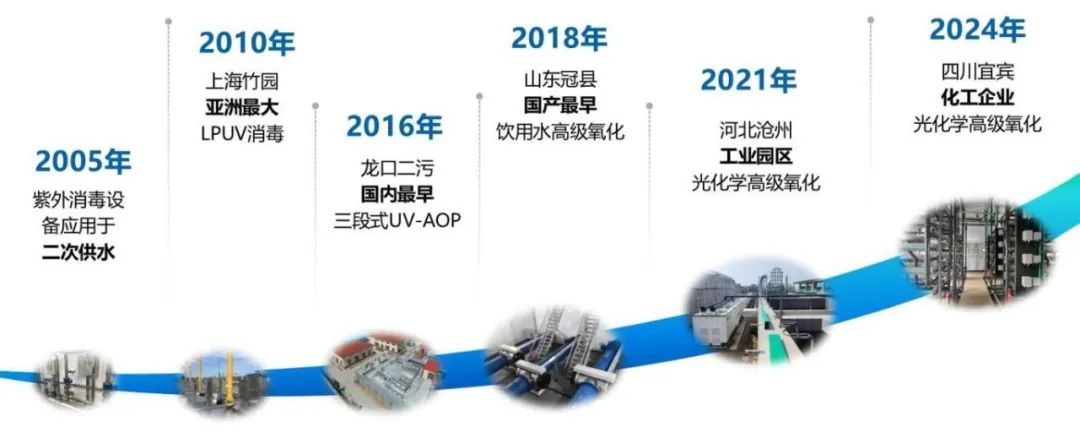
ONYX has been deeply engaged in UV technology for over 20 years.
It is the first company in China to successfully apply UV advanced oxidation technology to large-scale water treatment projects.