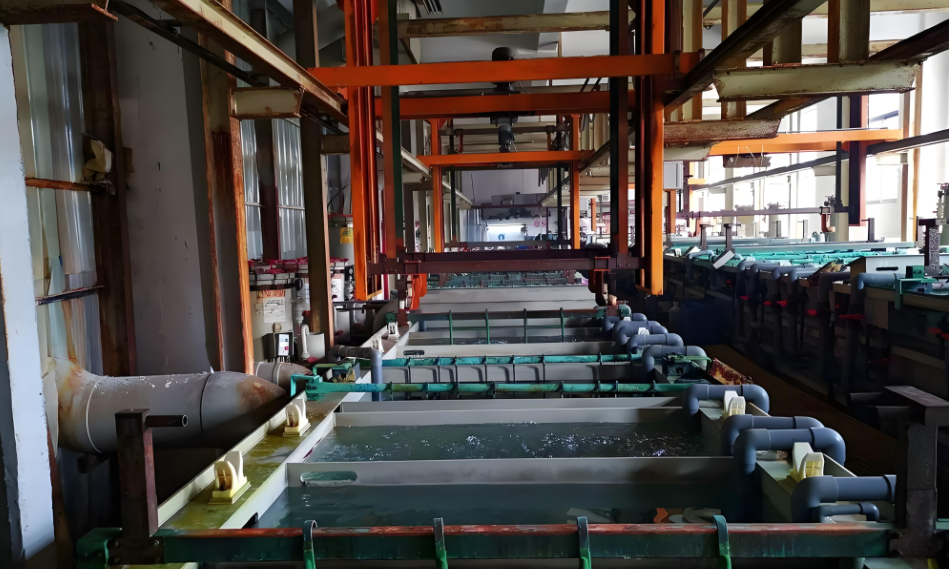
Cyanide, a highly toxic substance, is widely present in various industrial wastewaters. Its primary sources include electroplating, mining (especially gold mining), metallurgy, and chemical synthesis.
Cyanide exists in various forms in water, generally classified as free cyanide (FCN), weakly acid-dissociable cyanide (WAD-CN), and strongly acid-dissociable cyanide (SAD-CN).
Cyanide is extremely toxic to aquatic organisms and can accumulate through the food chain, ultimately posing a serious threat to human health. Effective treatment of cyanide-containing industrial wastewater to remove its toxicity is an urgent need in the fields of environmental protection and public health.
Treatment technologies for cyanide-containing wastewater include alkaline chlorination and ultraviolet oxidation:
·Although alkaline chlorination is a mature technology with relatively simple operation, it is prone to producing toxic chlorine-containing byproducts (such as AOX and chloramines) and is ineffective against certain stable complexed cyanides (such as ferricyanide complexes).
·UV/H2O2 advanced oxidation technology utilizes the synergistic effect of ultraviolet light (UV) and hydrogen peroxide (H2O2) to generate highly oxidative hydroxyl radicals (OH), effectively degrading cyanide. This process involves the generation of hydroxyl radicals, multi-step oxidation of cyanide, and the decomposition of complexed cyanide.
Once generated, hydroxyl radicals rapidly attack cyanide ions (CN-) in the water. The oxidative degradation of cyanide typically involves a multi-step process, first oxidized to relatively less toxic cyanate (CNO-). Cyanate is then further oxidized or hydrolyzed to non-toxic carbon dioxide (CO2) and nitrogen (N2) or ammonium salts.


For metal cyanide complexes commonly found in industrial wastewater, particularly weakly acid dissociated (WAD) cyanides such as copper cyanide (Cu(CN)x) and zinc cyanide, UV/H2O2 technology not only oxidizes free cyanide but also effectively disrupts the structure of these complexes, releasing metal ions and cyanide ions, which are then oxidized by ·OH.
In the UV/H2O2 treatment of cyanide, cyanate (CNO-) is the primary, detectable intermediate.
Cyanate is far less toxic than cyanide (approximately 1000 times less) and is unstable in aqueous solution, easily hydrolyzing or undergoing further oxidation.
A typical UV advanced oxidation cyanide removal curve:

At a pH below 9.2, cyanide primarily exists as highly toxic and volatile hydrogen cyanide (HCN). To avoid secondary pollution and safety risks caused by HCN escape, cyanide oxidation is typically carried out under alkaline conditions. Research has shown that a pH of 10-11 is an optimal range, but excessively high pH may hinder the efficient generation of ·OH.
· Electroplating Wastewater
Electroplating wastewater is one of the main sources of cyanide-containing wastewater. It is characterized by high concentrations of free cyanide and complex cyanide (such as copper cyanide complexes and zinc cyanide complexes), as well as the presence of various heavy metal ions (such as Cu, Ni, Zn, and Cr) and organic additives, resulting in a complex composition.
· Mining and Metallurgical Wastewater (Gold Mining, Steel, etc.)
The mining and metallurgical industry, particularly gold hydrometallurgy (cyanide gold extraction) and steel coking processes, generates large amounts of cyanide-containing wastewater. This type of wastewater is characterized by a wide range of cyanide concentration fluctuations and the potential presence of refractory metal cyanide complexes (such as ferrocyanide complexes [Fe(CN)6]3-/4-, which are much more stable than WAD cyanides) as well as other associated pollutants (Enviolet-Cyanide Classification) such as thiocyanate (SCN-). UV/H2O2 technology shows promise in treating this type of wastewater.
· Other Chemical Industry Wastewater
In addition to electroplating and mining, some chemical processes such as organic synthesis, pharmaceuticals, and pesticide production can also generate cyanide-containing wastewater, which may contain organic cyanides (nitrile compounds). The ·OH produced by UV/H2O2 technology has strong oxidizing properties and can not only degrade inorganic cyanides but also remove some organic cyanides and associated refractory organic matter, helping to improve the biodegradability of wastewater or reduce its overall toxicity.

 WSH紫外明渠
WTV紫外垂直模块
ZL大型管道式紫外
CLEAR中压紫外
MOL板式臭氧发生器
UV-AOP高级氧化
D.FITE滤布滤池
WSH紫外明渠
WTV紫外垂直模块
ZL大型管道式紫外
CLEAR中压紫外
MOL板式臭氧发生器
UV-AOP高级氧化
D.FITE滤布滤池