In the chip manufacturing industry, ultrapure water is known as the "blood" of the industry. It is used throughout all core chip manufacturing processes, including silicon wafer cleaning, photoresist coating and development, wet etching, and chemical mechanical polishing (CMP).
These processes place extremely stringent demands on water quality; even the slightest impurity can cause chip fluid failure.
Among many water quality parameters, total organic carbon (TOC) is a key indicator of the degree of organic contamination in ultrapure water. The presence of TOC, even at extremely low levels of ppb (parts per billion) or even ppt (parts per trillion), can seriously impact the quality of delicate semiconductor devices.
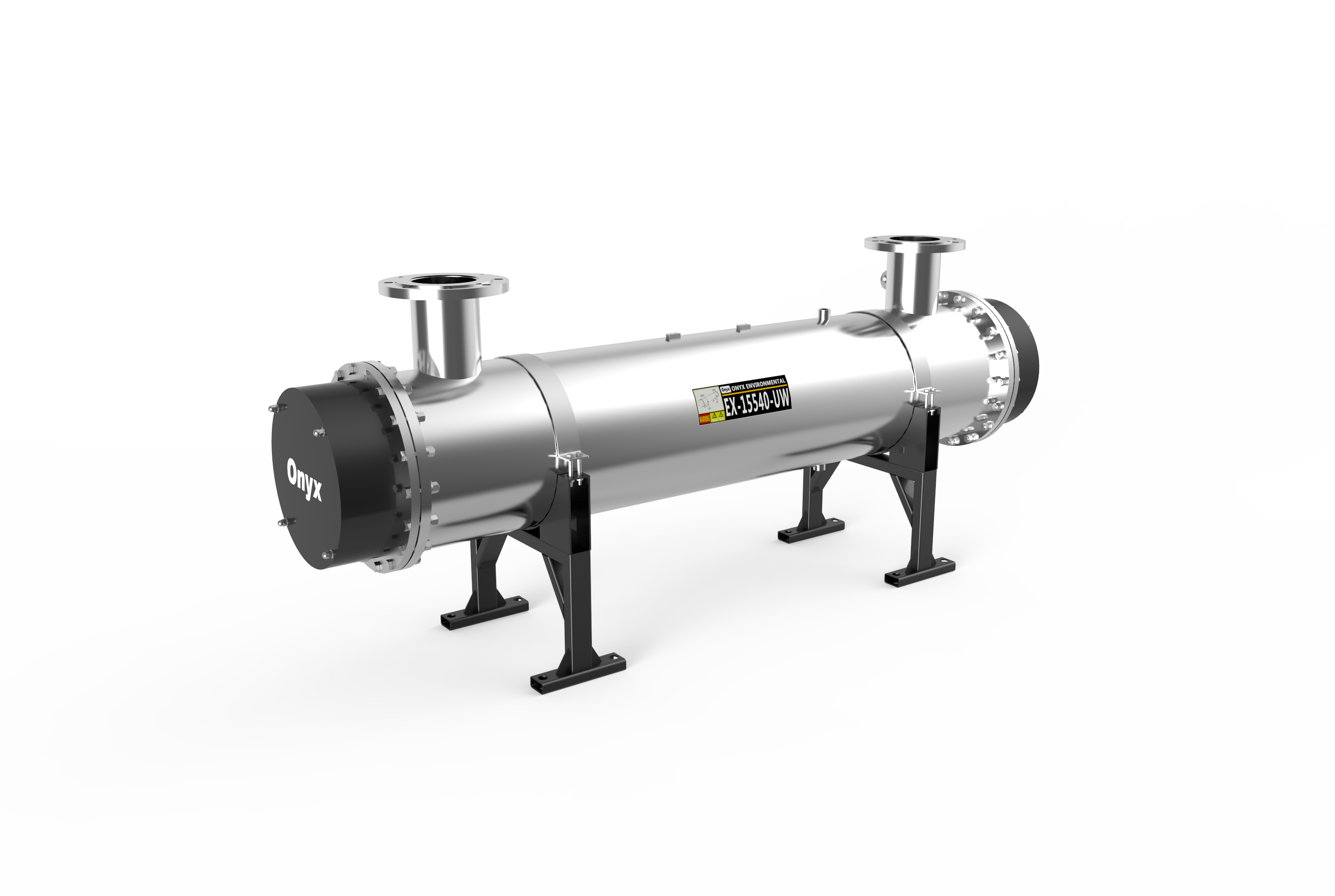
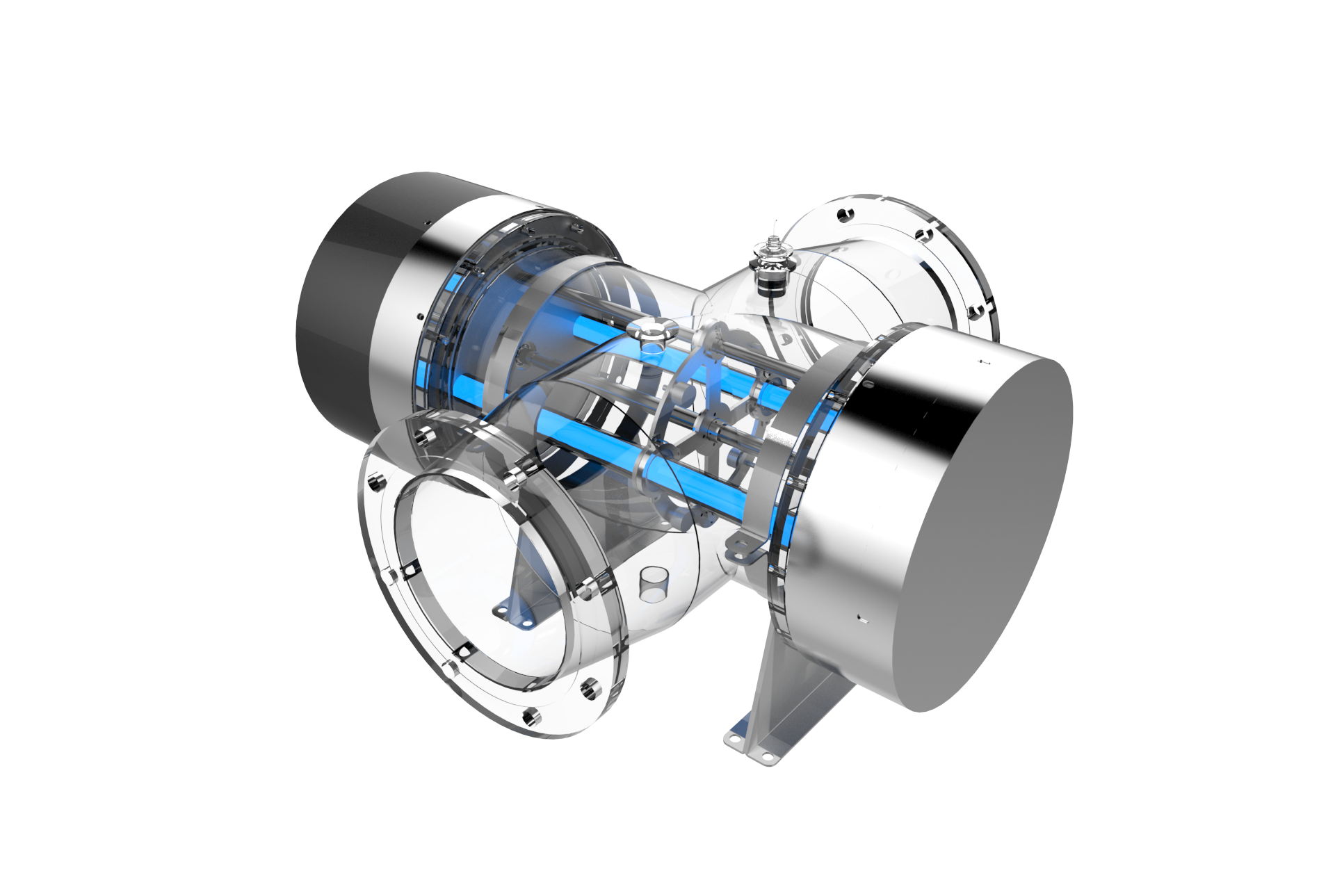
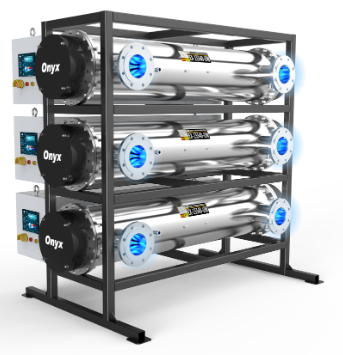
Vacuum ultraviolet (VUV) technology, an advanced, chemical-free method for TOC degradation, uses high-energy ultraviolet light directly on water or organic matter in it, generating strong oxidizing free radicals that break down the organic matter into harmless small molecules.
Low-pressure mercury lamps are the primary VUV light source used in current industrial applications, with 185nm VUV light being the primary contributor to TOC degradation.
VUV light (185nm) can directly photolyze water molecules, generating hydroxyl radicals (·OH) in situ. ·OH is a highly reactive species with strong oxidizing power, capable of non-selectively oxidizing and degrading most organic pollutants in water. This process, when used in pure VUV photolysis, eliminates the need for additional chemical reagents, thus avoiding the risk of secondary contamination. This is particularly important for the preparation of ultrapure water.
The target for controlling TOC in ultrapure water is typically less than 1 ppb (ug/L).
Advanced processes even require limits below 0.5 ppb or even ppt (ng/L).
· Position in the UPW system:
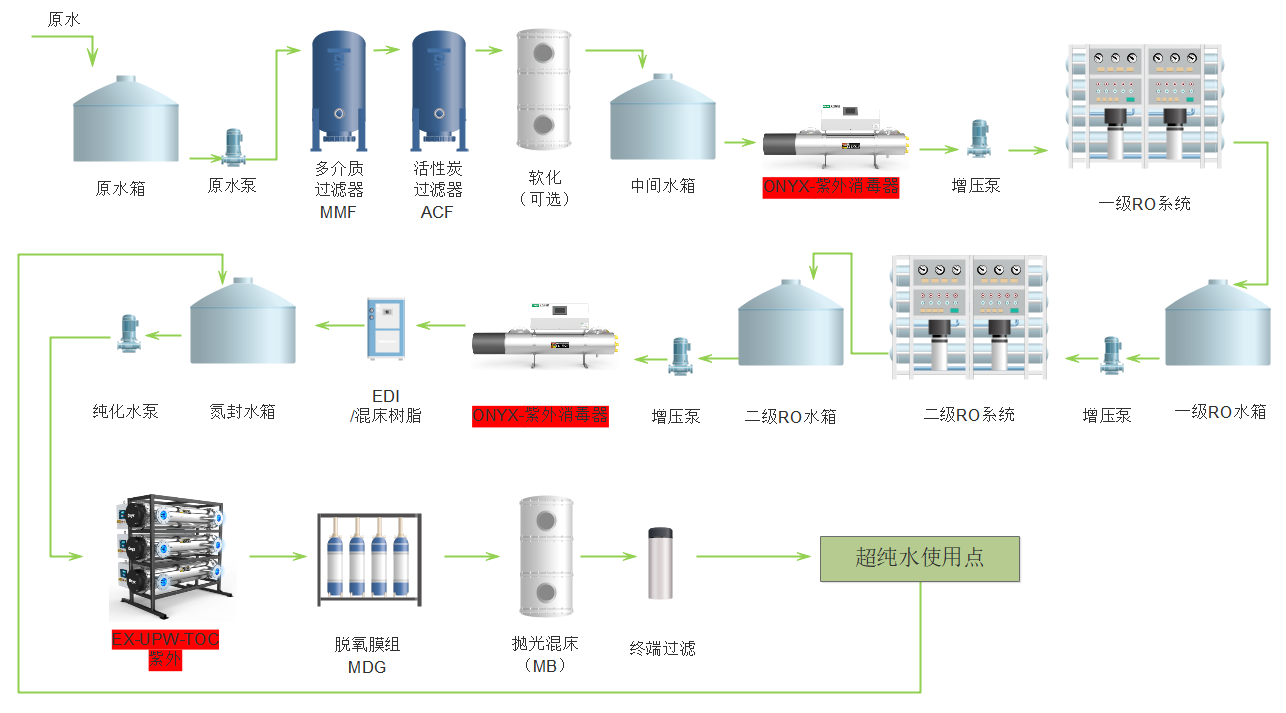
Typical ultrapure water process flow chart
Advanced Treatment of Small-Molecular Organic Compounds
The UV/H₂O₂ Advanced Oxidation Process (UV/H₂O₂ AOP) is a highly efficient, non-selective advanced treatment technology for the removal of residual small-molecule organic compounds from reverse osmosis (RO) effluent.
•OH Radical Non-Selective Attack
The core of the UV/H₂O₂ process is that under 185 nm or 254 nm UV light, H₂O₂ undergoes homolytic cleavage to produce hydroxyl radicals (•OH). These radicals react with the C–H, C=C, and C≡C bonds of small-molecule organic compounds, continuously oxidizing small-molecule organic compounds (<350 Da, such as methanol, urea, oxalic acid, PPCPs, and EDCs) that are not retained by RO, ultimately mineralizing them into CO₂ and H₂O.

 WSH紫外明渠
WTV紫外垂直模块
ZL大型管道式紫外
CLEAR中压紫外
MOL板式臭氧发生器
UV-AOP高级氧化
D.FITE滤布滤池
WSH紫外明渠
WTV紫外垂直模块
ZL大型管道式紫外
CLEAR中压紫外
MOL板式臭氧发生器
UV-AOP高级氧化
D.FITE滤布滤池